Blog 3751 – 02.17.2026
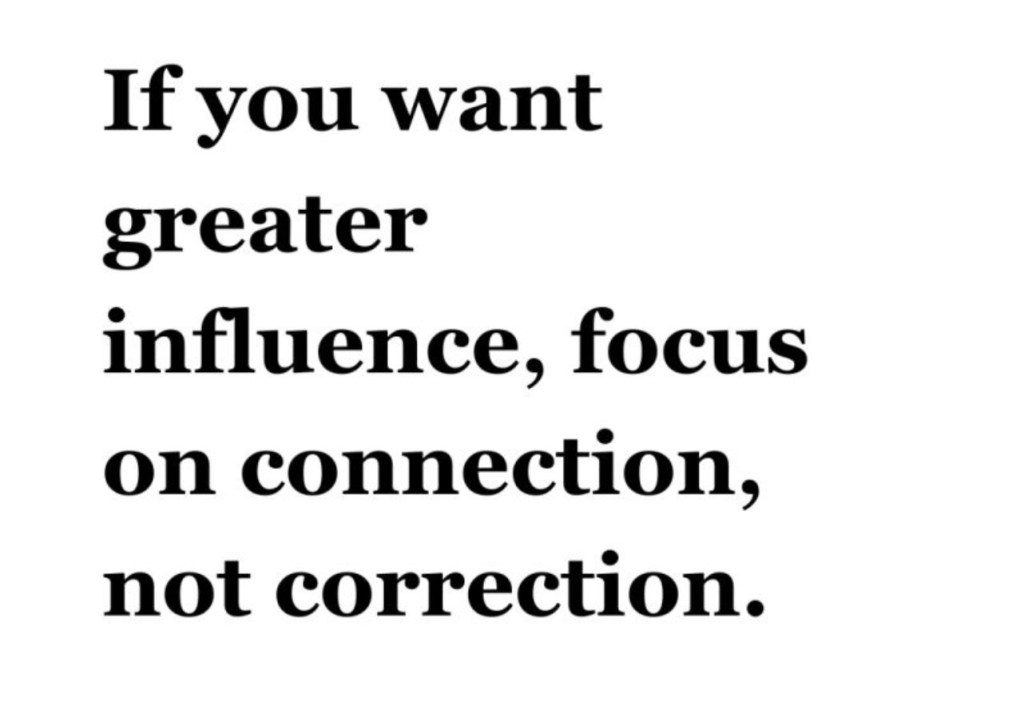
Focus On Connection Rather Than Correction
I grew up in a family that was very competitive where the saying “Winning is not everything, but the only thing” felt right at home. Card games and table games were our favorite family pastime and we were ruthless. One of my dad’s often quoted lines from his WW2 card playing Navy days was, “Hang your heart on the door before you sit down at the table.” We were highly critical of one another, poking and prodding one another’s weaknesses, ever quick with criticism and correction.
I said all of that to explain that I was taught from an early age that correcting and continually finding fault was what parents, husbands and wives did. Such lessons are difficult to unlearn. My wife for years has tried to correct my habit of correcting her especially the way I pointed out her mispronouncing words even though I clearly knew from the context what she meant.
I am trying very hard to be a better husband and a better caregiver as we learn deal with one of the scariest aspects of aging. Last night after my wife retired I watched a YouTube video that offered advice on the best way to communicate with loved ones dealing with dementia. The dictionary defines dementia as:
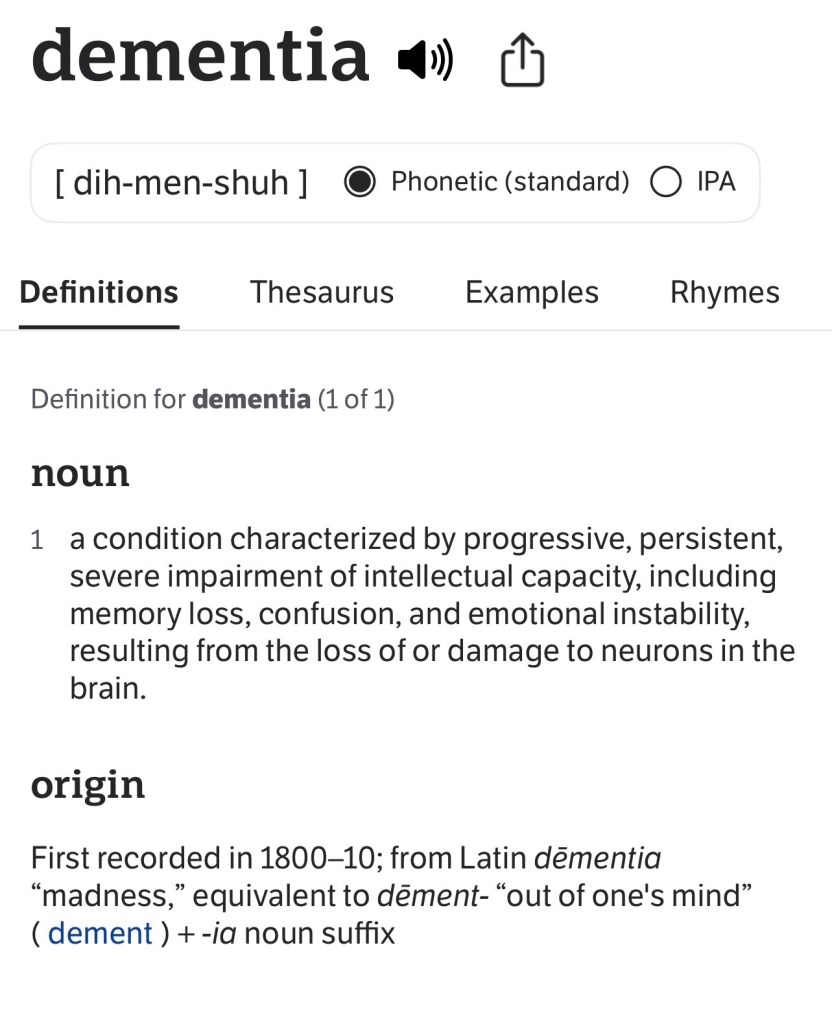
Parkinson’s and Alzheimer’s, are but two of the many degenerative brain disease diagnoses that fall under the term dementia. People suffering from these disorders are often confused, afraid, angry, and difficult to deal with. The therapist in the YouTube video who has dealt with hundreds of dementia patients said that the first step to becoming a better caregiver is to practice connection rather than correction. My upbringing did not prepare me for this and being a male I have two additional strikes against me. The male default mode is to try to “fix” things and “mansplaining” is our default communication mode, an irritating mode (especially to women) of over-explaining.
The therapist went on to advise that talking less and listening more were keys to connecting. Learning better more effective ways to show how much we care is what caregiving and care-living is all about.
Validating other’s feelings means not trying to correct them or fix them, but accepting them where they are and being there for them.
Your friend and fellow traveler,
David James White
 theencouragingword